How to Build a Whole-Home Audio System That Doesn’t Look Like a Science Project
Published August 2026 · By Dan, SmartHome Connect LLC · Lenexa, KS
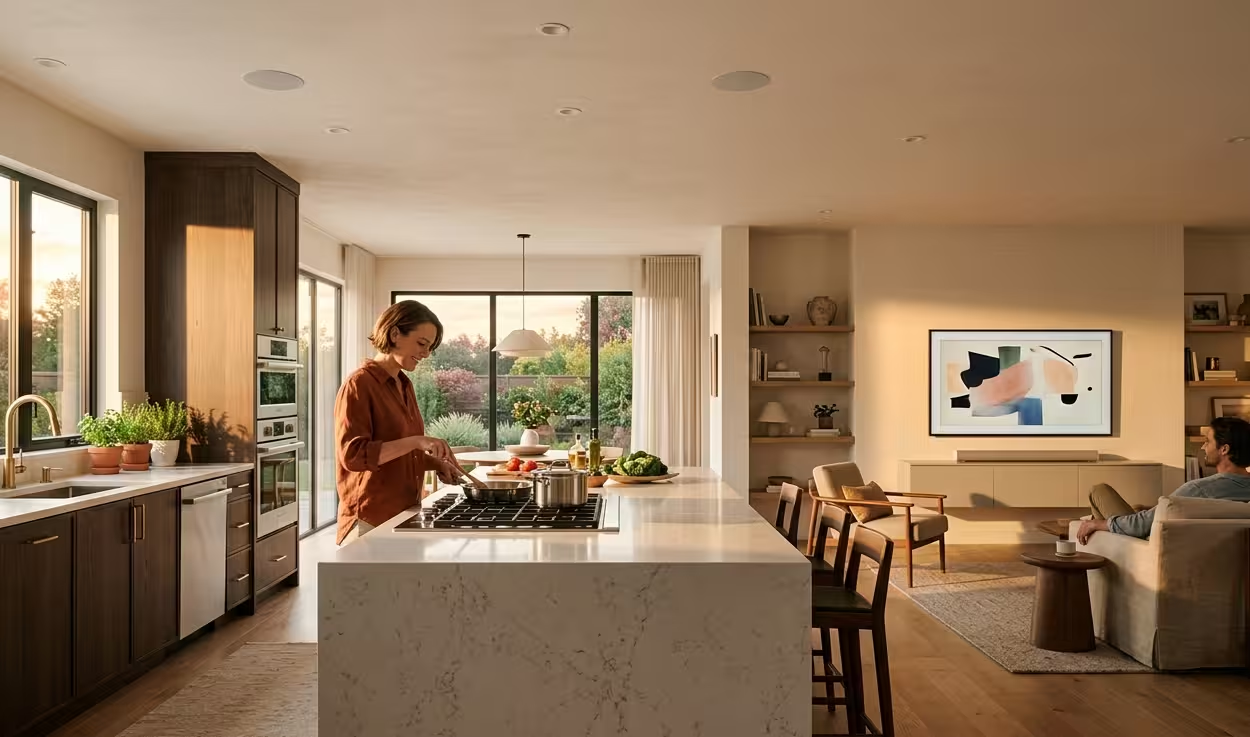
Picture a Saturday morning: coffee going in the kitchen, a playlist following you from the bedroom, out to the patio while you fire up the grill, back inside without missing a verse. No speaker in sight. No phone-to-speaker Bluetooth ritual. The house just has music the way it has light.
That’s what a whole home audio system does when it’s designed instead of accumulated. The accumulated version — I see it constantly — is a Bluetooth speaker per room, each with its own volume, its own dying battery, and its own opinion about staying paired. One client in Leawood had six different speakers from four brands and told me the family group chat had a running joke about “speaker roulette.” We replaced all of it with four zones on one app.
There are two real ways to build this, plus a hybrid that’s what I install most. All three are more attainable than people expect.
Path One: Wireless Multi-Room (the Sonos Route)
Wireless platforms — Sonos dominates, but Bose and Denon HEOS compete — use WiFi-connected speakers grouped through one app. An Era 100 on the kitchen counter, a Move 2 that travels to the patio, an Arc soundbar in the living room, all playing in sync or independently. Setup takes an afternoon. No construction. The system grows one speaker at a time, which makes it easy to start small.
The honest tradeoffs: every speaker sits visibly on a counter or shelf, every speaker needs an outlet, and the whole arrangement leans on your WiFi being solid. That last one matters more in Kansas City than the marketing admits — the plaster-and-lath walls in older KC homes destroy WiFi signal, and a Sonos speaker on a weak connection drops out mid-song, every time, until you fix the network first.
Cost picture: three rooms of Sonos — kitchen, living room, patio — runs $800-$1,500 in hardware with minimal installation beyond configuration.
Path Two: Wired In-Ceiling (the Invisible Route)
This is the version you notice in higher-end homes precisely because you don’t notice it. Speakers mount flush in the ceiling, painted to vanish. Wire runs through the attic or wall cavities to a central multi-zone amplifier — I typically spec Sonos Amp units or a Yamaha MusicCast multi-zone receiver depending on the project — and each room becomes a zone controlled from your phone or a wall keypad.
No counters occupied. No batteries. No WiFi dependency for the audio itself. And unlike a shelf of portable speakers, in-ceiling audio adds resale value — it reads as part of the house, like good lighting.
The tradeoff is honest too: running wire through a finished home is professional work. Attic access makes it straightforward; finished ceilings below finished floors make it surgical. That’s the price of invisible.
Cost picture: three wired zones run $2,000-$4,000 installed — speakers, amp, wiring, control setup. Push to six zones with outdoor-rated patio speakers and a living room subwoofer and a serious system lands between $5,000-$8,000.
A note on the outdoor zone, since it’s the one KC weather complicates: patio speakers need to be genuinely outdoor-rated — sealed drivers, corrosion-resistant hardware — not indoor bookshelf speakers under an eave. Klipsch and Polk both make weather-rated models that survive our freeze-thaw cycles and July heat. Wire them through the exterior wall with a sealed penetration, and they’ll outlast the deck they’re mounted over. The failed outdoor zones I’ve replaced were all indoor speakers that spent one Missouri winter outside.
The Hybrid: What Actually Goes in Most of My Installs
Wired in-ceiling speakers where aesthetics matter most — kitchen, living room, primary bath — and wireless portables for the flex spaces. A Sonos Amp driving the wired zones keeps everything inside one app, so the ceiling speakers and the portable on the patio group together from the same screen without any extra steps.
This splits the budget sensibly: you pay for invisible where you live, and for flexible where you roam. Most hybrid projects I build land in the $3,000-$5,000 range and cover five zones.
One Interface or It Falls Apart
The control layer decides whether a whole home audio system feels like magic or like homework. The failure mode is four apps: one for the ceiling speakers, one for the soundbar, one for the patio, one for the TV. Nobody in the family learns four apps. The system goes unused.
Keeping everything inside one ecosystem (Sonos native, or amp hardware that joins it) solves most of this. For living rooms already juggling a TV, soundbar, and streaming boxes, a universal remote ties the knot — the Sofabaton X2 I reviewed last month folds audio control into the same device that runs the TV, which is exactly where game-day volume adjustments want to live.
Start With Two Rooms, Not Eight
The mistake is designing the whole house on day one and getting paralyzed by the total. Start where you actually live: for most families that’s the kitchen and main living area, and those two zones deliver most of the daily value. Add the patio before next summer. Let the system earn its expansion.
If you’re wondering what your house can support — attic access, wall construction, WiFi strength all shape the answer — I’ll come take a look at no cost and map out a phased plan that fits your budget. First zone to full house, on your timeline.
(913) 674-9723 — call or text — or smarthomeconnectllc.com/contact-us.
Serving Lenexa, Overland Park, Olathe, Shawnee, Leawood, and the full KC metro.
For professional help, see Whole-home audio installation.