Does Kansas City Heat Damage Your Outdoor TV and Cameras?
Published July 2026 · By Dan, SmartHome Connect LLC · Lenexa, KS
Last week it hit 101°F in Lenexa. The week before that, we had four straight days above 95. And we’re only in mid-July — KC’s hottest days are usually in late July and early August.
If you have electronics mounted outside — an outdoor TV, security cameras, a Ring doorbell — they’re baking right now. And most people don’t think about heat damage until something stops working and they can’t figure out why.
I install outdoor electronics across the KC metro, and every summer I get calls about the same failures. So I want to walk through what the heat actually does, what’s at risk, and what you can do about it.
What Heat Does to Outdoor TVs
Every TV has an operating temperature range listed in its spec sheet. Most indoor TVs are rated for 50°F to 104°F (10°C to 40°C). That sounds fine until you realize that a black TV screen facing afternoon sun on a covered patio can reach 130-150°F on the surface — well past the rated limit.
What happens when a TV overheats depends on severity. Mild overheating causes the screen to dim automatically (thermal throttling). The TV is protecting itself by reducing brightness, but the picture looks washed out and you can barely see it in daylight. Moderate overheating causes image artifacts — color banding, flickering, dark patches that appear and disappear. Severe overheating shuts the TV off entirely, and repeated thermal cycles degrade internal components — capacitors, LED backlights, and T-CON boards fail prematurely.
Purpose-built outdoor TVs from brands like SunBrite and Furrion are rated for -20°F to 140°F and use ventilated enclosures with internal fans. If you took my advice in the outdoor TV installation guide and went with an outdoor-rated model, you’re in better shape. If you mounted a regular indoor TV under your patio cover — this is the article where I tell you why that’s a problem.
What Heat Does to Security Cameras
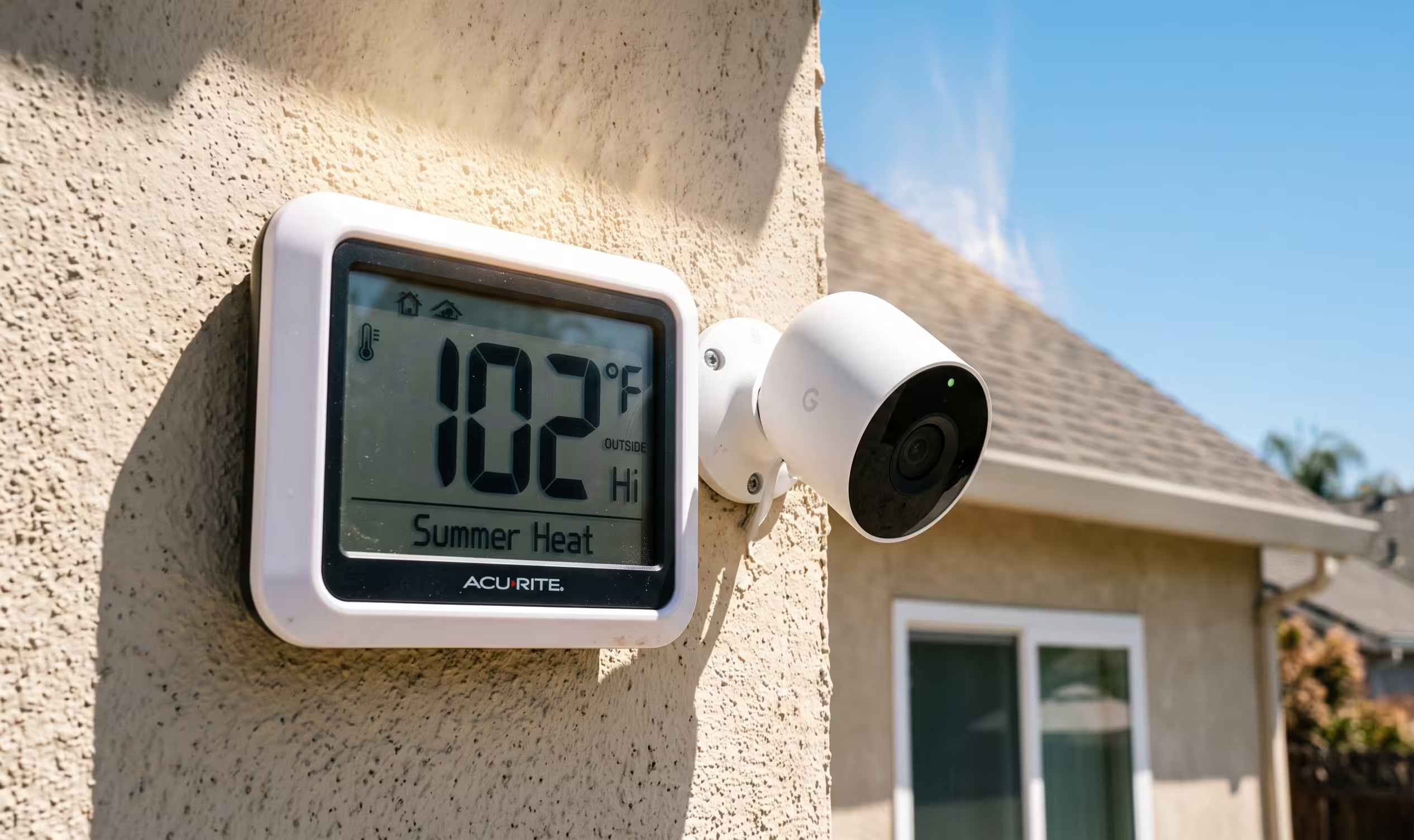
Outdoor security cameras are designed for weather exposure, but “designed for” and “immune to” are different things. Most IP66-rated cameras are rated for an operating range of -22°F to 140°F. In KC’s summer sun, a camera mounted on a south- or west-facing wall, with no shade, can push past that upper limit.
Heat-stressed cameras exhibit specific symptoms. The image develops a pink or purple tint — that’s the CMOS sensor overheating. Night vision starts flickering or producing washed-out footage. The camera reboots itself randomly, causing gaps in your recording timeline. In extreme cases, the IR LEDs (the little lights around the lens for night vision) burn out permanently.
I wrote about weatherproofing and storm survival in my cameras surviving KC storms post — heat is the other half of that equation. Storms test the waterproofing. Summer tests the thermal limits.
Ring Doorbells and Heat
Ring doorbells have a narrower operating range than most people expect: -5°F to 120°F. Like outdoor TV heat damage, Ring heat issues are a direct result of sun exposure and dark housing color. A front door facing west in July gets direct afternoon sun. The dark-colored Ring housing absorbs heat. I’ve measured doorbell surface temperatures above 135°F on sun-exposed installs.
When a Ring overheats, it shows a “Temperature” warning in the app and temporarily shuts down to cool off. During that window, you get no motion alerts, no video, no doorbell notifications. If someone walks up to your door during that 20-minute cooldown period, you miss it completely.
The fix is positioning. If your front door faces west or south and gets direct afternoon sun, a small awning or overhang above the doorbell makes a measurable difference. Even 4-6 inches of shade drops the surface temperature significantly. I also recommend the wired version over battery — battery Ring doorbells drain faster in heat, compounding the problem. I covered more Ring-specific issues in my Ring troubleshooting guide.
How to Protect Your Outdoor Electronics from Heat
Preventing outdoor TV heat damage comes down to four factors — and they apply to cameras and doorbells too.
Position matters more than product. A camera under a 12-inch eave runs 15-20 degrees cooler than the same camera mounted on an exposed wall. An outdoor TV under a covered patio with a ceiling fan stays within operating range while the same TV in direct sun hits thermal shutdown by 2 PM.
Color matters. Black and dark gray housings absorb more solar radiation than white ones. If you’re choosing between two equivalent cameras, pick the lighter-colored housing for south- and west-facing positions.
Ventilation matters. TVs in enclosed weatherproof boxes need active ventilation — a small exhaust fan that runs when the internal temperature crosses a threshold. Without it, the enclosure becomes an oven. Purpose-built outdoor TVs have this built in. DIY enclosures usually don’t.
Power management matters. Heat stresses power supplies. A UPS or surge protector rated for outdoor use protects against the brownouts and voltage sags that happen during KC heat waves when every AC unit in the neighborhood runs at full blast. I’ve replaced cameras and NVR power supplies that fried during brownouts — a $30 surge protector would have prevented it.