It’s Getting Dark Earlier — Is Your Home’s Outdoor Lighting Ready for Fall?
Published September 2026 · By Dan, SmartHome Connect LLC · Lenexa, KS
There’s a week every September when everyone in Kansas City notices it at once. You leave work at the usual time, and it’s… dim. By early October, sunset lands before 6:45. By November, you’re driving home in the dark.
Here’s why that matters beyond the mood: the majority of home break-ins and package thefts happen under cover of darkness or in low-light evening hours — and the dark hours are about to double. Every fall I get a wave of calls after something happened: a package gone from a dark porch, a car rummaged through in a pitch-black driveway. The calls I’d rather get are the ones before.
So let’s talk about outdoor security lighting — what actually works, what’s a waste, and what I’d put on your house if it were mine.
Light Is the Cheapest Security You Can Buy
Cameras record what happened. Light changes what happens. Someone approaching a dark house has privacy to work with; someone lit up on a driveway at 9 PM does not. Police and insurance folks have said versions of this forever, and my own experience installing across this metro backs it up: well-lit homes get skipped.
What works in your favor: lighting is the least expensive layer of home security. A quality motion floodlight costs less than a single camera. The trick is putting the right kind of light in the right places — which is where most DIY setups miss.
And placement mistakes are predictable. The most common one I see: a single blinding flood over the garage aimed at the street, which lights up passing cars all night and leaves the actual walkways dark. The second: lights mounted so high they illuminate the top of someone’s head but never their face — useless for your cameras, comfortable for anyone who’d rather not be identified. Height between 8 and 10 feet, angled at the path of approach, is the sweet spot for both deterrence and usable footage.
The Three Zones That Matter
When I walk a property, I’m looking at three areas.
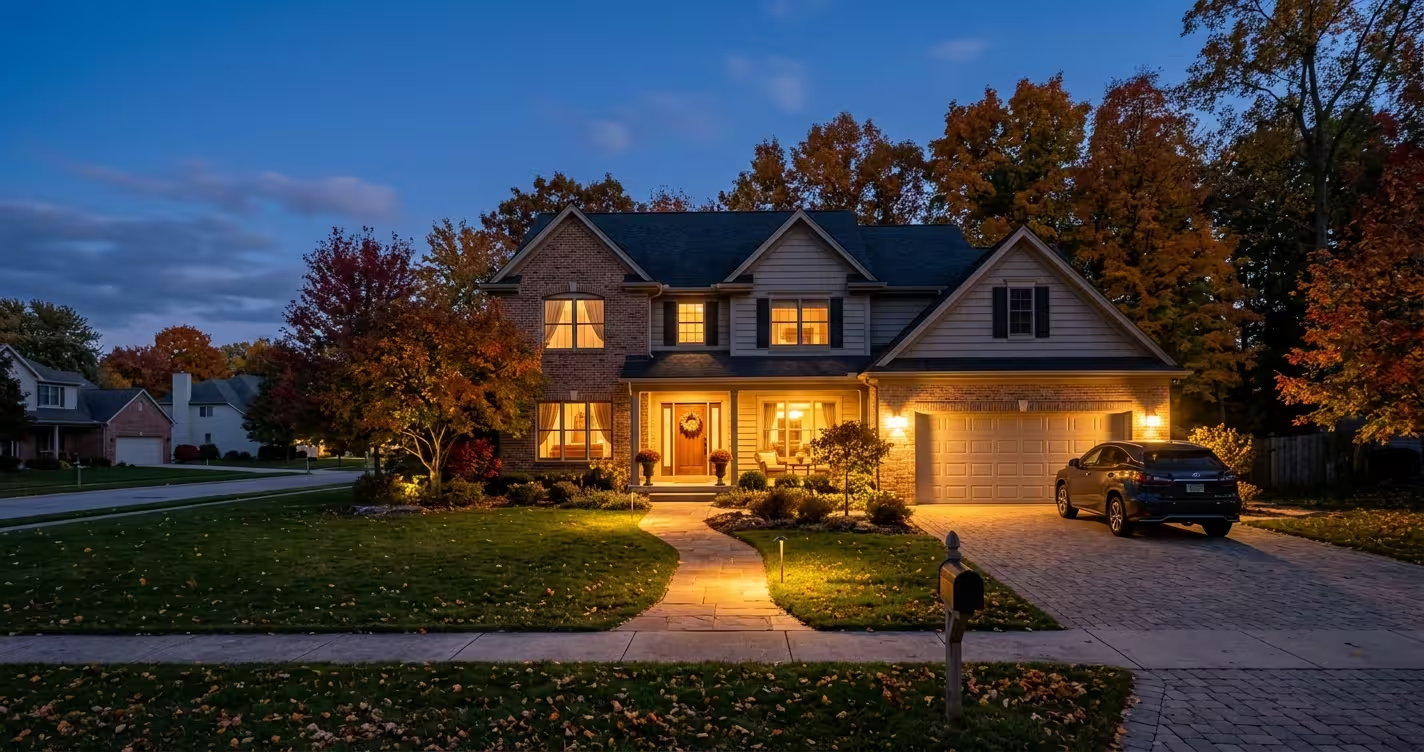
The approach: driveway and front walk. This is where motion-activated floodlights earn their keep. Someone pulls in or walks up, light comes on. You want coverage of the path a person would actually take, angled to light faces, not just pavement.
The entries: front door, back door, garage side door. These deserve constant gentle light through the evening — a porch light on a dusk-to-dawn schedule — plus a camera. A lit entry looks occupied, and it means your Ring doorbell captures usable color video instead of grainy night-vision gray. Cameras and lights are partners: I covered in my camera buying guide how much footage quality depends on available light.
The blind sides: the dark strip along the side of the house, behind the garage, the back corner of the yard. These are the paths nobody watches and everybody underestimates. A motion light on each blind side removes the hiding spots. When I do a security walkthrough, this is where I find the gaps at almost every house.
Motion vs. Always-On vs. Smart — What Goes Where
Motion lights belong on approaches and blind sides. The sudden on is the point — it startles, and it signals that the house reacts. Modern LED motion floods are bright (2,000-3,000 lumens), cost $40-$80 per fixture, and the good ones let you tune sensitivity so a raccoon doesn’t run the show all night.
Always-on (dusk-to-dawn) lights belong at entries. Soft, warm, welcoming — 800 lumens or so is plenty. You’re not lighting a stadium; you’re saying somebody’s home.
Smart lights add scheduling and remote control on top. Landscape lighting that follows sunset automatically as it shifts through the fall. Porch lights you can flash from your phone if you hear something. Away modes that vary the pattern so the house never looks like it’s on a timer — the same trick I recommend in my vacation prep article, useful year-round.
A Quick Story About the Difference This Makes
Last October, a client in Shawnee had two packages stolen off her porch in the same month. Porch light burned out, camera catching nothing but a dark shape. We did three things in one afternoon: dusk-to-dawn bulb on the porch, a motion flood over the driveway, and adjusted her doorbell’s motion zone. Two weeks later she sent me a clip — a car slowing in front of her house at 10 PM, the driveway flood snapping on, and the car simply driving away. No incident, no police report. Just a light doing its job before anything happened.
That’s the whole pitch, really. The best security event is the one that never occurs.
What an Install Looks Like
Most outdoor security lighting projects I do fall between $300 and $900 — a mix of motion floods on the blind sides, entry lighting on schedules, and wiring where existing fixtures can be upgraded in place. If a spot needs new wiring run, that adds cost; if your fixtures just need smarter replacements, it’s quick work. Bundled with a camera check or a Ring install, it usually fits in a single visit.
The dark months are coming either way. Want me to walk your property before they get here? Call or text (913) 674-9723, or find me at smarthomeconnectllc.com/contact-us.
Serving Lenexa, Overland Park, Olathe, Shawnee, Leawood, and the full KC metro.