The Ultimate Guide to Safely Mounting Your Television Over a Fireplace
When you walk into a beautifully designed living room in Kansas City, your eyes are immediately drawn to the focal point of the space. For decades, that focal point has been the fireplace. Today, homeowners want to combine the natural warmth of a glowing fire with the cinematic experience of a massive, ultra-high-definition television.
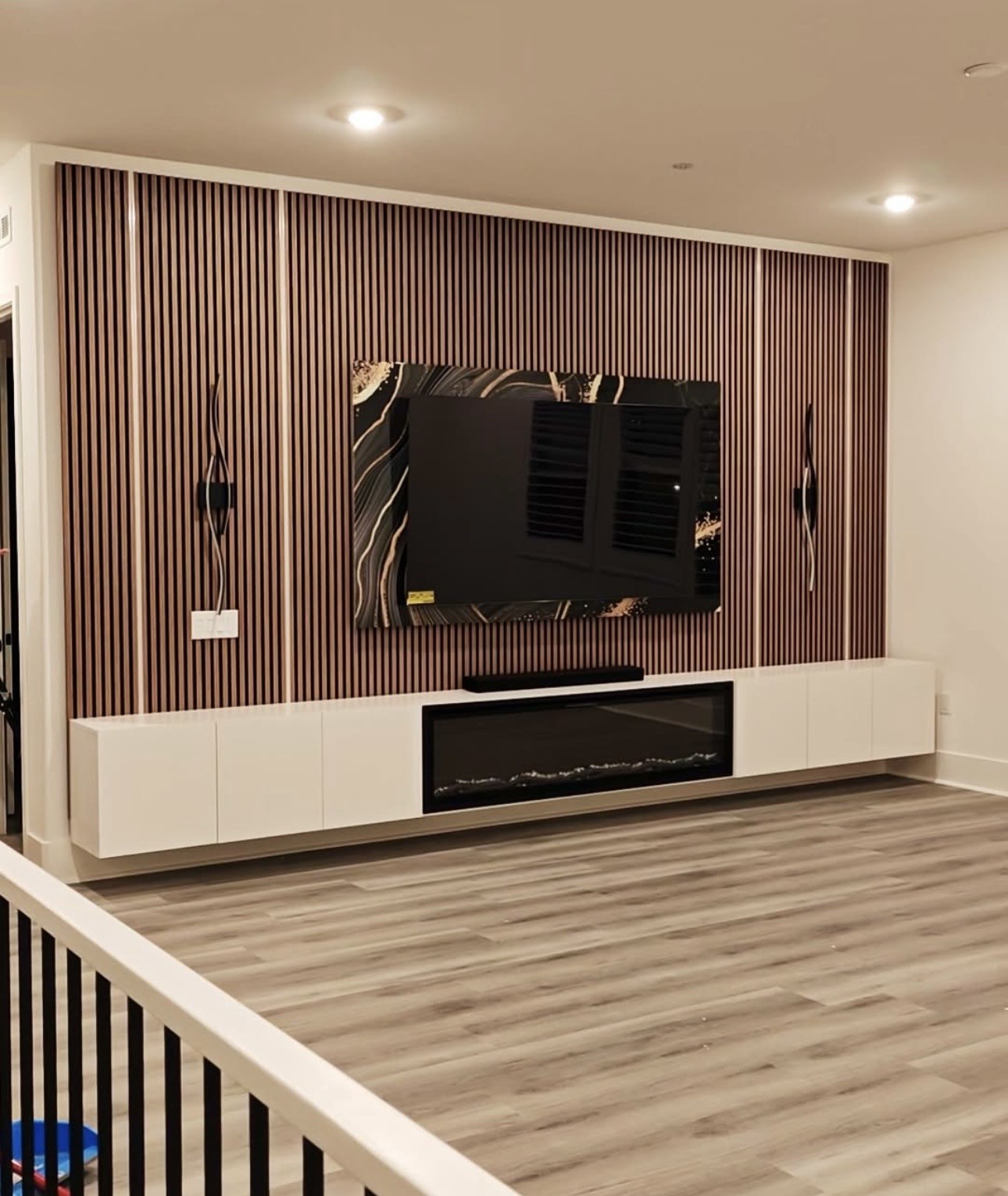
Mounting your television directly above the mantel is hands down the most requested design choice we see in the industry. It saves valuable floor space, eliminates the need for bulky entertainment furniture, and creates a clean, sophisticated aesthetic that looks like it belongs in an architectural magazine.
However, bringing this beautiful vision to life is not as simple as drilling a few holes in the drywall. Combining delicate electronics with solid masonry and an active heat source requires specialized engineering. When done incorrectly by an amateur, it can lead to melted plastic, ruined picture quality, or a catastrophic fall. Here is the professional guide to executing the perfect fireplace television installation that protects your investment and elevates your home.
Conducting the Crucial Thermal Test Before You Buy a Screen
The single biggest concern with mounting a television over an active fireplace is heat management. Modern ultra-thin televisions are essentially powerful computers housed in plastic and glass. They generate their own internal heat and require cool ambient air to function properly.
Before you even purchase a mounting bracket, you must understand the thermal dynamics of your specific fireplace. Not all fireplaces generate the same amount of ambient wall heat. A modern, glass-enclosed gas fireplace pushes heat out into the room very differently than a traditional, open-hearth wood-burning fireplace.
We highly recommend performing a simple thermal test. Tape a standard indoor thermometer to the exact spot on the wall where the center of your new television will sit. Turn your fireplace on to its maximum heat setting and leave it running for a few hours. Check the thermometer. If the temperature on that wall exceeds ninety degrees Fahrenheit, you cannot safely mount a television flush against that surface without intervention.
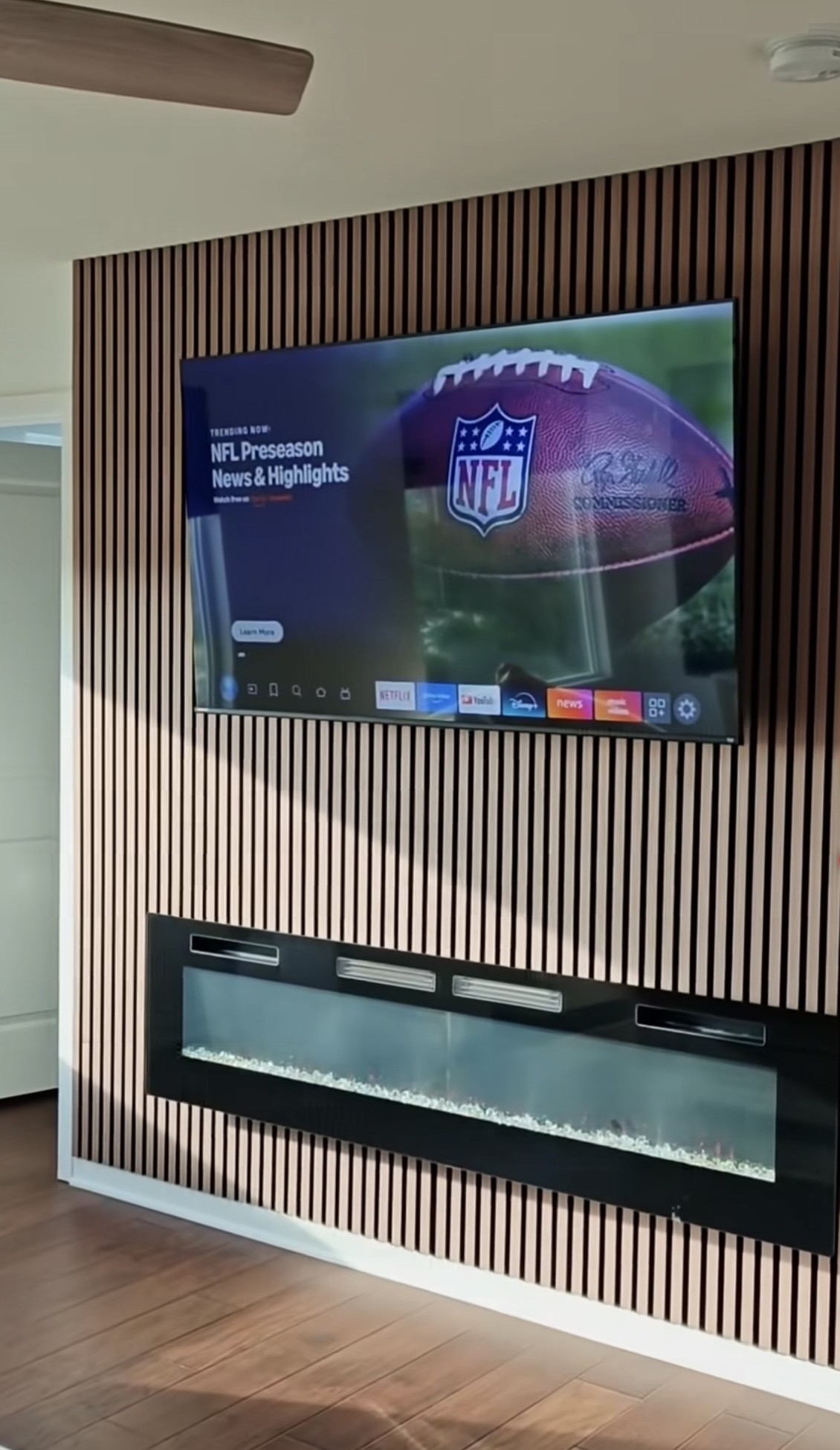
This is where the mantel comes into play. A deep, solid wood or stone mantel acts as a critical heat deflector. It catches the rising thermal column and forces the hot air to roll outward into the living room, creating a safe, cool pocket of air directly above it where your television will live.
Mastering the Complex Art of Hiding Cables Inside Solid Stone
The primary reason homeowners want a television over the fireplace is for the clean, minimalist aesthetic. That illusion is instantly destroyed if there are thick black power cords and HDMI cables dangling down the front of your beautiful brickwork.
Concealing wires over a fireplace is the most challenging aspect of the installation, and it is the exact reason why this project should be left to professionals. Unlike standard hollow drywall, fireplaces are often built from solid stone, brick, or cinder block, leaving zero room behind the wall to fish cables.
Professional installers use highly specialized masonry tools to solve this. We carefully drill through the mortar joints—never the brick itself—to create a pathway. Depending on the architecture of your home, we might route the cables sideways into adjacent cabinetry, or use specialized conduit systems designed to blend seamlessly with the texture and color of the stone.
The goal is to provide hardwired power and data connections directly behind the screen so the television appears to be magically floating above the mantel.
Solving the Uncomfortable Viewing Angle With Dynamic Pull Down Technology
Once you solve the heat and the wiring, you have to address human ergonomics. Because fireplaces are tall, mounting a television above the mantel often places the center of the screen six or seven feet off the floor.
If you are sitting on a low modern sofa, looking up at that extreme angle for a two-hour movie can cause severe neck strain and tension headaches. Furthermore, looking at an LED or QLED screen from a low angle often washes out the colors and destroys the deep blacks of the image.
The ultimate solution to this problem is utilizing dynamic mounting hardware. Instead of a standard fixed bracket, we install advanced, counterbalanced pull-down systems. When the television is turned off, it sits high and flush against the wall, perfectly complementing the room’s decor.
When it is time for movie night, you simply grab the handle at the bottom of the screen and pull it forward and down over the mantel. Industrial gas pistons bear the entire weight of the television, allowing it to glide effortlessly to eye level. This restores perfect picture quality and completely eliminates neck strain. If you are struggling with a high fireplace in an older home, you can read exactly how a pull down mount will save your neck and solve the television over fireplace dilemma in classic Kansas City homes.
Securing Heavy Screens to Masonry Requires Commercial Grade Hardware
The sheer weight of a modern television combined with a heavy-duty articulating mount can easily exceed one hundred pounds. If you are using a pull-down mount, you are also adding kinetic force every time you move the screen.
Securing this amount of moving weight to a masonry surface requires deep technical knowledge. You cannot use the standard plastic drywall anchors that come free in the box with the television bracket. Those will pull out of brick and mortar almost immediately under tension.
Professionals use heavy-duty steel sleeve anchors, concrete wedge anchors, or specialized masonry epoxies to ensure the mount becomes structurally integrated with the chimney breast itself. Choosing the wrong hardware is incredibly dangerous. We have documented the severe risks involved and exactly what to look for when researching the hidden dangers of cheap pull down mounts and why MantelMount stands out as the safest option.
Protecting Your Television Screen From Ash and Smoke Residue
If you have a traditional wood-burning fireplace, you have one final element to manage. Even with a perfectly drawing chimney, microscopic soot and ash particles will occasionally escape into the living room.
Over time, this invisible film of soot will settle on the surface of your television screen. If you try to wipe this off with a dry paper towel, the abrasive ash will act like sandpaper, permanently scratching the delicate anti-glare coating on your display panel.
Maintaining a television in this environment requires a very specific cleaning routine using microfiber cloths and distilled water solutions. Never use standard window cleaners containing ammonia, as they will strip the protective layers off the screen instantly. For a complete walkthrough of the safest maintenance techniques, be sure to review our guide on how to properly clean your television screen without damaging it.
Five Questions to Ask Before You Mount Above the Fireplace
Before you buy a bracket, walk through this quick safety checklist:
- Wood-burning or gas/electric? Wood fireplaces run hotter; gas and electric are often easier to manage but still need a temperature check.
- Do you have a deep mantel (about 6–12″)? A solid mantel helps deflect rising heat away from the screen.
- How close will the TV sit to the firebox? Less than about 12″ of clearance is a red flag without heat mitigation.
- Can you watch comfortably from that height? Neck strain is real when the screen sits too high over the mantel.
- Have you measured wall temperature with the fireplace on? An infrared thermometer or the tape-a-thermometer test above is non-negotiable.
Major brands (including Samsung and LG guidance many installers follow) generally warn against locations that regularly exceed about 104°F (40°C) at the TV. If your wall hits that while the fireplace runs, flush-mounting without shielding or a different placement is asking for trouble.
Heat Shielding Options When the Wall Runs Warm
- Heat deflector plates that redirect rising air away from the mounting zone
- Thermal insulation in the cavity where appropriate (without trapping TV exhaust vents)
- Fireplace hoods / mantel extensions that create a cool pocket above the firebox
For cables in high-heat zones, use in-wall-rated HDMI, prefer a recessed outlet behind the TV when possible, and avoid cheap non-rated cords that can degrade near heat.
Eye Level Math: Why “Just Above the Mantel” Often Hurts
On a typical sofa, seated eye level is roughly 40–42 inches off the floor. In many classic Kansas City homes (Shirtwaists, Tudors, Colonials), the mantel already sits near five feet — so a 65″ TV above it can put the screen center well above 65″. That means constant chin-up viewing: neck muscle fatigue, tension headaches, and eye strain from an unnatural upward gaze.
A good rule of thumb: the bottom third of the screen near seated eye level for long movie or game sessions. If the architecture forces a high rest position, a counterbalanced pull-down mount (such as MantelMount) lets the TV sit flush high when idle and drop to a comfortable height when you watch. Many quality pull-down systems also include heat-sensing handles that warn you if temperatures climb too high before you pull the screen down over an active fire.
High Angles Also Hurt Picture Quality
Looking up at a sharp vertical angle washes out contrast (blacks go milky), shifts color, and reduces perceived brightness — especially on LCD/LED/QLED panels. Pulling the screen down to eye level isn’t only about comfort; it restores the picture you paid for.
Why Pull-Down Installs Need Serious Anchoring
A fixed mount mostly fights gravity (shear). A pull-down arm that extends nearly two feet from the wall creates a strong cantilever / tension load on the top fasteners every time you move the TV. That is why fireplace pull-downs need commercial-grade masonry hardware and a careful assessment of whether the facade is structural brick versus decorative veneer — not the plastic anchors that ship in a consumer box.
Fireplace TV Mounting in Kansas City
Most new homes around Kansas City are built with a decorative fireplace and one obvious spot for the TV: right above it. That’s the job I do more than any other. Most are 65-inch TVs going over stone, tile, or brick, in neighborhoods like Wolf Creek and Ironhorse in Overland Park, Cedar Creek in Olathe, Canyon Creek in Lenexa, and Raintree Lake in Lee’s Summit.
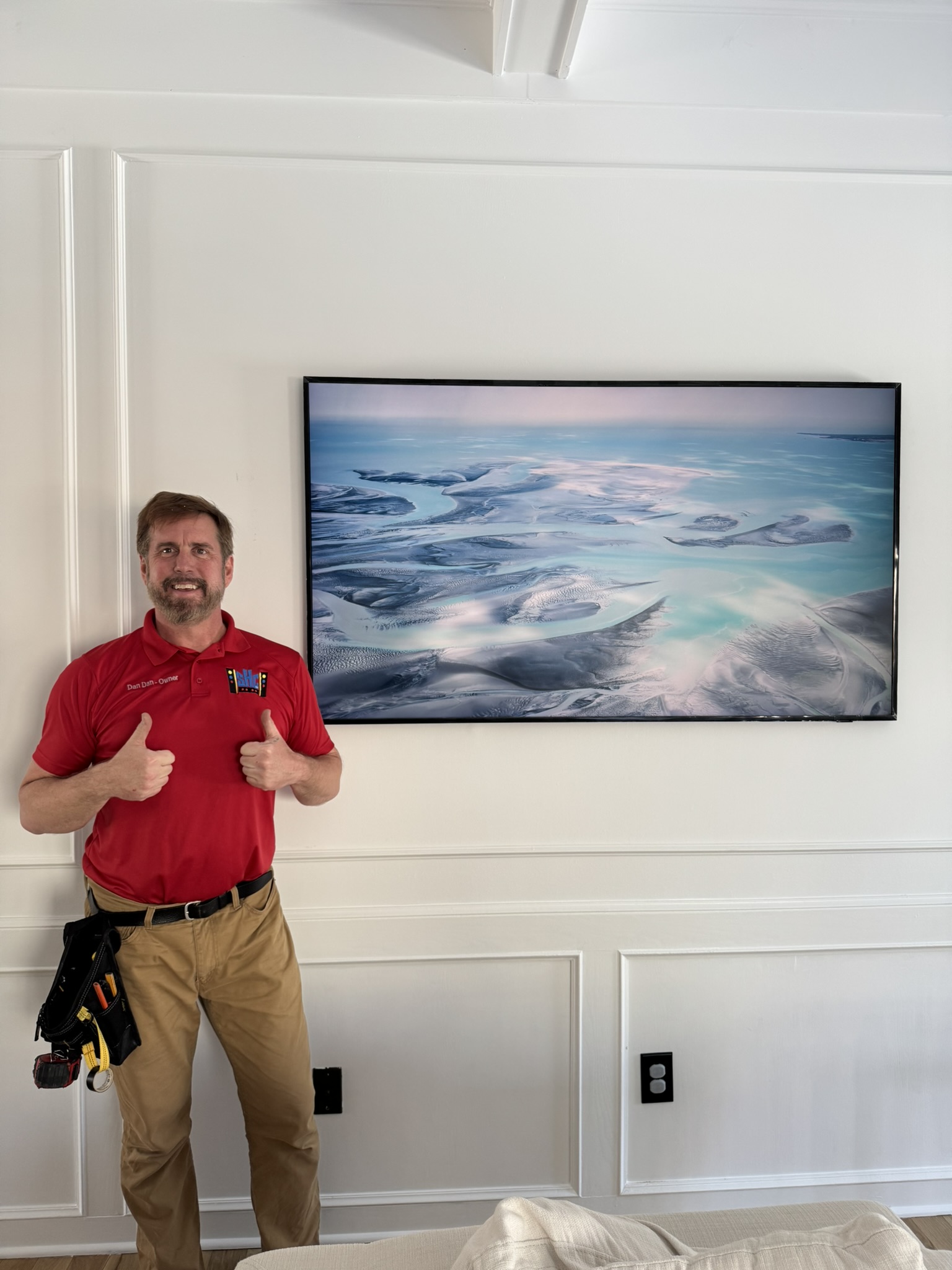
Stone and brick need the right anchors and the right drill, not the hardware in the box. If the TV would sit too high to watch comfortably, a MantelMount pull-down mount lets you bring it down to eye level when you watch and push it back up when you’re done. If you want the TV to look like art, a Samsung Frame TV mounted flush over the fireplace is one of the cleanest looks you can get.
Basic TV mounting starts at $150, and most over-fireplace jobs run $225–$400 depending on the surface, the mount, and whether the wires can be hidden. A MantelMount pull-down runs $850–$1,000 manual or $1,050–$1,200 motorized, mount included. Send a photo of your wall and I’ll give you a firm price. Call or text (913) 674-9723.
Mounting your television over the fireplace creates a stunning, luxurious entertainment space. By respecting the heat dynamics, using the correct dynamic mounting hardware, and trusting a professional for TV mounting in Kansas City and the masonry wiring, you can achieve the magazine-perfect aesthetic without ever compromising your comfort or the safety of your equipment.