Are Smart Locks Worth It? What I Tell Homeowners Who Ask Me Every Week
Published September 2026 · By Dan, SmartHome Connect LLC · Lenexa, KS
A client in Olathe called me last month, half laughing and half annoyed. Her son had locked himself out for the third time that summer. The spare key under the flowerpot was gone — probably in a pocket of his that went through the wash. She was driving home from work, again, to let a teenager into his own house.
We put a keypad smart lock on her front door the next week. Her son got his own code. Problem gone. She texted me a few days later: “Why didn’t we do this years ago?”
That’s the short version of whether smart locks are worth it. But the honest answer has more to it, because I’ve also talked people out of them. So let me give you the same conversation I’d have on your porch.
What a Smart Lock Actually Changes
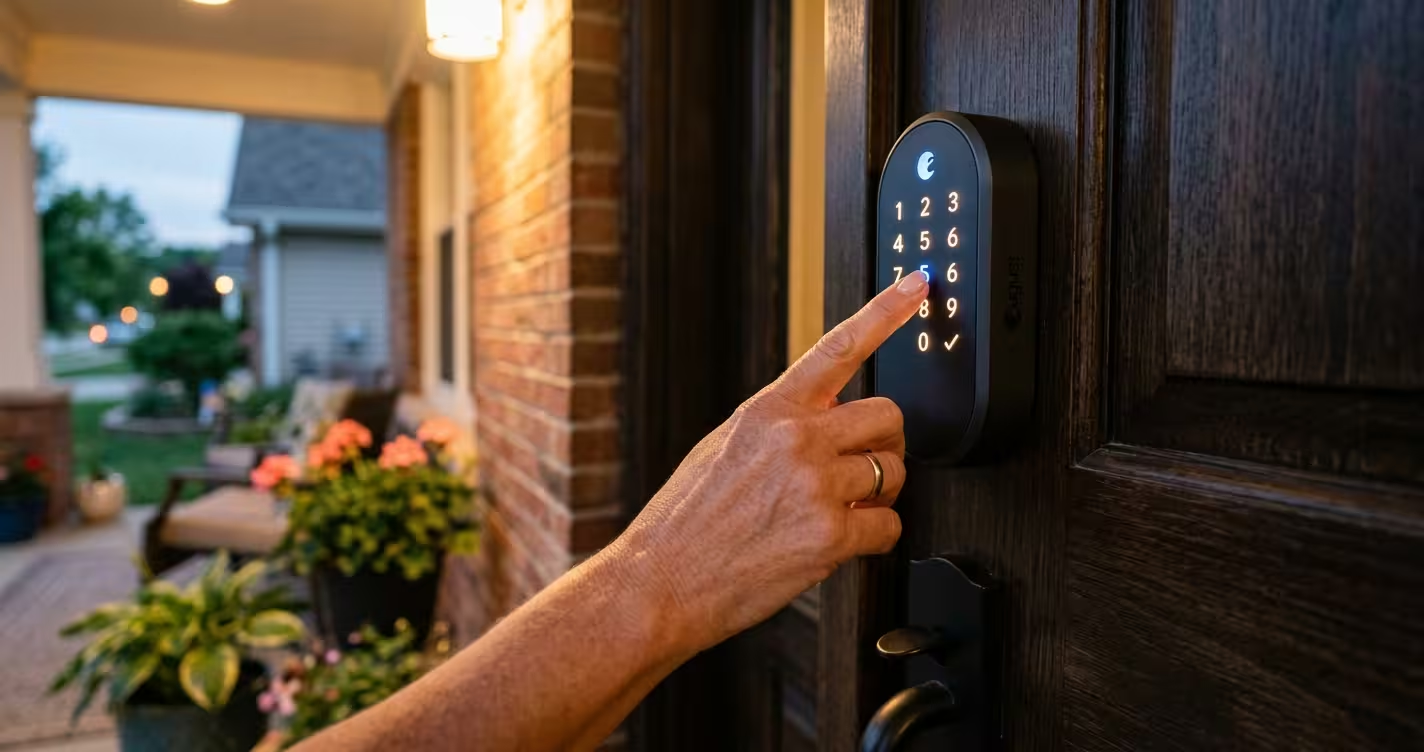
The obvious part: no more keys. You unlock the door with a code, a fingerprint, your phone, or your voice — depending on the model. Most keep a physical keyhole as backup, so you’re never truly stranded.
The less obvious part is what changes day to day. You stop hiding keys under rocks. You stop making copies for the cleaner, the dog walker, the in-laws. Instead, each person gets their own code — and you can delete any code the moment it’s no longer needed. Contractor finishing a two-week job? Their code expires Friday. That level of control is something a metal key can never give you.
And then there’s the 8 AM moment everyone knows: halfway to work, wondering if you locked the door. With a WiFi-connected lock, you check your phone. Locked. Or it wasn’t — and you tap once, and now it is.
The People Who Get the Most Out of One
After a couple hundred of these installs, patterns show up. Families with kids old enough to come home alone get more value than anyone — no lost keys, no lockouts, and you get a notification when the kid’s code is used, so you know they made it home. Frequent travelers love the remote check. Anyone with a rental or a guest room that hosts often can hand out temporary codes instead of coordinating key handoffs.
And here’s one nobody thinks about until it happens: after a breakup, a falling-out with a roommate, or losing a wallet with your address in it, rekeying a traditional deadbolt costs $80-$150 and a locksmith visit. With a smart lock, you delete a code in ten seconds. Free.
The People I’ve Talked Out of It
Smart locks aren’t for everyone, and I’d rather tell you now than after you’ve paid me.
If nobody in your house carries a smartphone comfortably — some of my older clients, for example — a lot of the features go unused, and the keypad alone might not justify the switch. If your front door is badly warped or misaligned (common in some of the older housing stock around KC), the motorized bolt will strain against the frame and eat batteries every few weeks. The door needs fixing first; I’ve written about how older KC homes fight modern tech in other contexts, and doors are part of that story.
And if your WiFi doesn’t reach your front door reliably, a WiFi lock will frustrate you. There are offline keypad models that sidestep this completely — codes stored in the lock itself, no app, no network — and for plenty of households that simpler version is the right call.
What About Batteries and Break-Ins?
The two questions everyone asks. Batteries: most locks run on four AAs and last six months to a year. The lock warns you weeks before it dies — low-battery alerts on your phone and on the keypad. And nearly every model has a backup: a physical key, or a 9-volt battery terminal on the bottom that powers the keypad long enough to get in.
Security: a quality smart lock is a deadbolt with electronics attached — the bolt itself is the same hardened steel. Nobody is “hacking” your front door in any realistic scenario; break-ins in our area come through unlocked doors, weak door frames, and windows, not through Bluetooth. What I do recommend: pair the lock with a Ring doorbell so you see who’s at the door before deciding to unlock it remotely. The combination — see, talk, unlock — is where the whole thing starts feeling genuinely smart.
Installation: Easier Than You’d Think, With One Catch
Swapping a deadbolt for a smart lock takes me about 30-45 minutes with a screwdriver. The catch is alignment. A smart lock is far less forgiving of a sloppy fit than a manual deadbolt — your hand can force a sticky bolt, but a small motor can’t. Getting the strike plate aligned so the bolt glides is the part that separates a lock that works for years from one that drains batteries and throws jam errors.
That’s the piece I bring: I install the lock, align the door hardware properly, connect it to your WiFi or hub, set up codes for the whole family, and pair it with your doorbell or cameras if you have them. Typical cost including a quality lock runs $250-$450 depending on the model you pick.
So — Worth It?
For most households with kids, guests, travel, or a habit of losing keys: yes, and you’ll wonder why you waited, just like my client in Olathe. For homes with door problems, weak WiFi at the entry, or no interest in codes and apps: fix those first, or go with a simple offline keypad model.
If you’re not sure which camp you’re in, text me a photo of your front door and I’ll tell you straight. (913) 674-9723 — or book a visit at smarthomeconnectllc.com/contact-us.
Serving Lenexa, Overland Park, Olathe, Shawnee, Leawood, and the full KC metro.