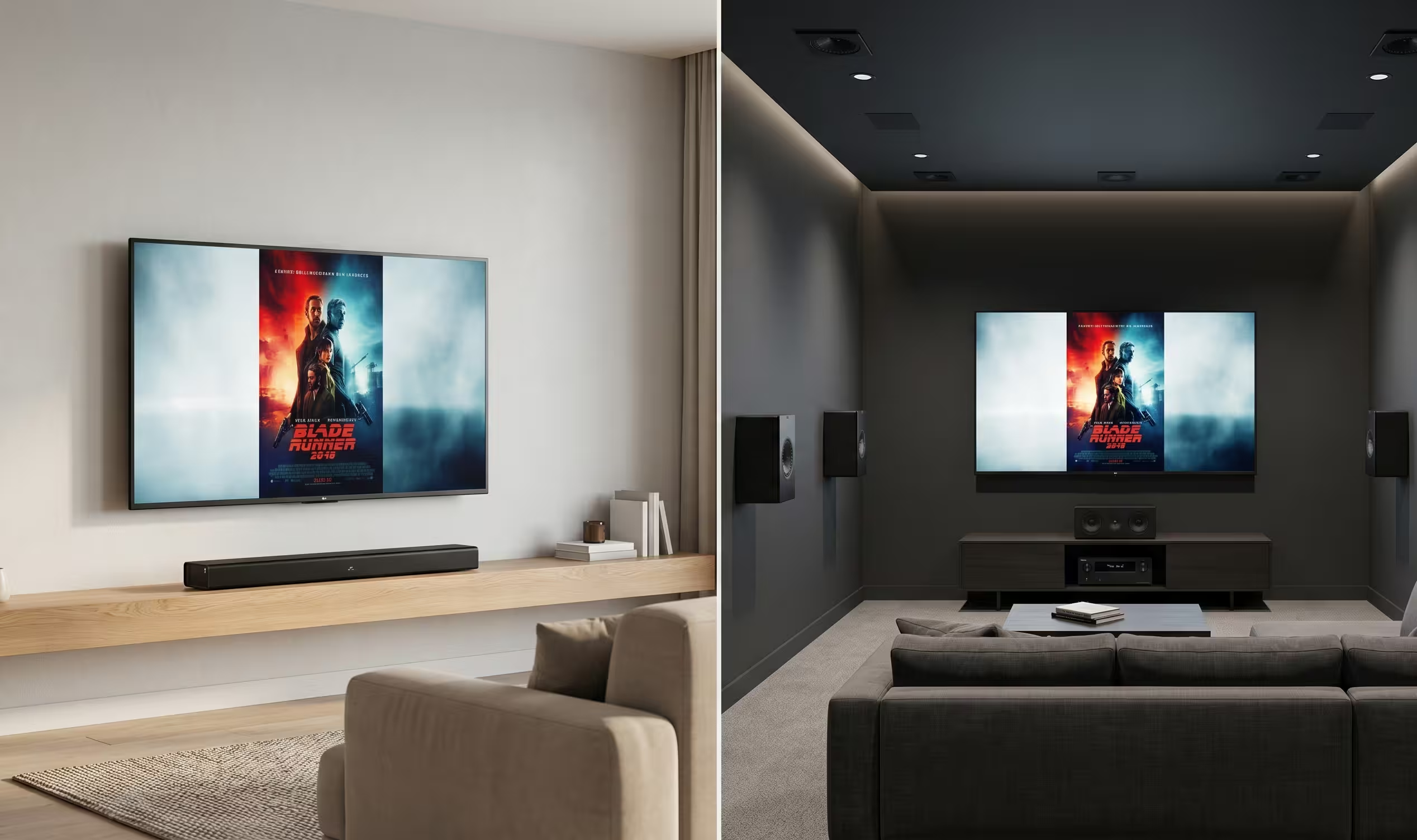
Soundbar vs. Surround Sound: Which Setup Actually Makes Sense for Your Room?
Published May 2026 · By Dan, SmartHome Connect LLC · Lenexa, KS
You just got your TV mounted on the wall. It looks great. Then you turn it on, and the audio sounds like it’s coming through a tin can. That’s because modern TVs are incredibly thin — which is great for aesthetics and terrible for speakers. There’s physically no room for decent drivers inside a panel that’s half an inch thick.
So you need external audio. The question everyone asks me is: soundbar or surround sound?
The honest answer depends on your room, your budget, and how much you care about cable management. I install both, and I’m going to give you the same advice I give homeowners in person.
Soundbars: What They Do Well
A good soundbar is a massive upgrade from TV speakers. A single unit sits below your TV (wall-mounted or shelf-mounted) and delivers clear dialogue, solid bass through a wireless subwoofer, and enough volume to fill a standard living room.
A soundbar makes sense when:
- Your room is a standard living room or bedroom (under ~400 sq ft)
- You mainly watch TV shows, news, sports, and casual movies
- You want a clean look with minimal hardware visible
- You don’t want to run speaker wire through walls or ceilings
- Your budget is $200-$800 for the audio setup
Modern soundbars with Dolby Atmos support (like the Sonos Arc, JBL Bar 1300, or Samsung Q-series) use upward-firing drivers to bounce sound off your ceiling, simulating a surround effect. It’s not the same as real speakers behind you — but it’s surprisingly convincing in a smaller room with hard ceilings.
I covered some of these comparisons in an earlier post on AVR vs. JBL 1300 vs. Sonos Arc if you want the detailed specs.
Surround Sound: When It’s Worth It
A true surround sound system puts dedicated speakers around you — front left, center, front right, and rear speakers at minimum (5.1), plus height channels for Dolby Atmos (5.1.2 or 7.1.4). The “.1” is a subwoofer. The result is audio that moves around the room — a helicopter flies overhead, dialogue comes from center, explosions hit from behind.
Surround sound makes sense when:
- You have a dedicated media room, basement, or man cave
- The room is larger than ~300 sq ft or has high ceilings
- You’re serious about movies, gaming, or sports and want an immersive experience
- You’re willing to invest $1,000-$3,000+ in audio
- You’re okay with in-wall or in-ceiling speaker installation
Surround sound requires an A/V receiver (AVR) that processes the audio and powers each speaker independently. That means more hardware, more cables, and more setup. But the audio experience in a properly calibrated room is in a completely different category from any soundbar.
I wrote a detailed breakdown of surround sound calibration for different room sizes that covers speaker placement angles and room correction.
The WAF Factor (Yes, It’s a Real Thing)
WAF stands for “Wife Acceptance Factor,” and it’s a running joke in the audio/video industry — but it’s grounded in reality. A surround sound system means visible speakers on walls, cables running through the room (or professional in-wall installation), a receiver taking up shelf space, and a subwoofer sitting on the floor.
In a dedicated theater room or basement, that’s expected. In the main living room that also serves as the family gathering space, it often becomes a negotiation. I’ve had plenty of clients who wanted 7.1.4 Atmos in the living room and ended up with a soundbar after the conversation at home. That’s not a compromise — it’s the right call for the space.
A soundbar plus wireless subwoofer in the living room, and a full surround system in the basement. That’s the setup I install most often for homeowners who want both.
What About the “Surround Sound Soundbar” Claims?
Marketing teams love phrases like “virtual 11.1.4 surround” on a soundbar. I want to be straight with you: a single bar sitting under your TV cannot reproduce the effect of physical speakers placed around and above you. It can simulate some spatial effects, and in a small room with reflective walls it can sound pretty good. But it’s not surround sound.
If the marketing says “virtual” before the channel count, it’s software processing, not actual speaker channels. That doesn’t mean it’s bad — just know what you’re buying.
What It Costs
| Setup | Equipment | Installation |
|---|---|---|
| Soundbar + sub | $200 – $800 | $100 – $200 (wall mount, cable routing) |
| Soundbar + rear speakers | $500 – $1,200 | $150 – $300 |
| 5.1 surround | $800 – $2,000 | $300 – $600 (in-wall wiring, calibration) |
| 5.1.2+ Atmos | $1,500 – $4,000+ | $400 – $800+ (ceiling speakers, full calibration) |
Installation costs include in-wall speaker wire runs, mounting hardware, cable concealment, and system calibration. I calibrate every system I install — meaning I adjust levels, distances, crossover points, and room correction so the audio is tuned to your specific room. A $1,500 speaker setup in a room with bad calibration will sound worse than a $600 setup that’s been properly tuned.
Hybrid Soundbars (Detachable Rears) as a Middle Path
If you want more immersion than a single bar but aren’t ready for a full AVR and in-wall wiring, look at soundbars with detachable wireless rear speakers (for example systems in the JBL Bar family). They aren’t a true 5.1 AVR layout, but they add real speakers behind you instead of relying only on “virtual” channels. For many living rooms, that hybrid is the sweet spot between clean looks and movie-night punch.
Setup Reality Check: HDMI ARC vs. Full Wiring
- Most soundbars: HDMI ARC/eARC or optical — often up and running in minutes after the TV is mounted
- True 5.1 / Atmos: AVR, speaker wire (or in-wall/in-ceiling runs), sub placement, then calibration
- Dedicated center channel (surround): the underrated win for clear dialogue in action movies and sports — something a thin TV speaker (and some budget bars) still struggle with
Quick Picker: Casual Viewer vs. Movie Night
- Casual TV, news, sports in a living room or bedroom: soundbar + wireless sub is usually enough
- Dedicated movie / game nights in a basement or media room: real surround (5.1 or Atmos) pays off
- Want both convenience and a taste of surrounds: start with a hybrid bar + rears; you can still graduate to a full AVR later
My Take
For 80% of the living rooms I walk into, a quality soundbar with a wireless subwoofer is the right answer. It’s a night-and-day improvement over TV speakers, it looks clean under a mounted TV, and the install takes under an hour. If you’ve read my thoughts on why expensive speakers won’t fix bad home theater sound, you know that room setup and calibration matter more than brand names.
For basements, media rooms, and anyone who genuinely cares about audio immersion — go surround. Just have it installed and calibrated properly. A calibrated surround setup sounds worlds apart from a DIY job with speakers dropped wherever they fit.
Not sure which direction to go? I’ll come look at your room and give you an honest recommendation. No charge for the consultation.
Call or text (913) 674-9723 or visit smarthomeconnectllc.com/contact-us.
Serving Lenexa, Overland Park, Olathe, Shawnee, Leawood, and the full KC metro.